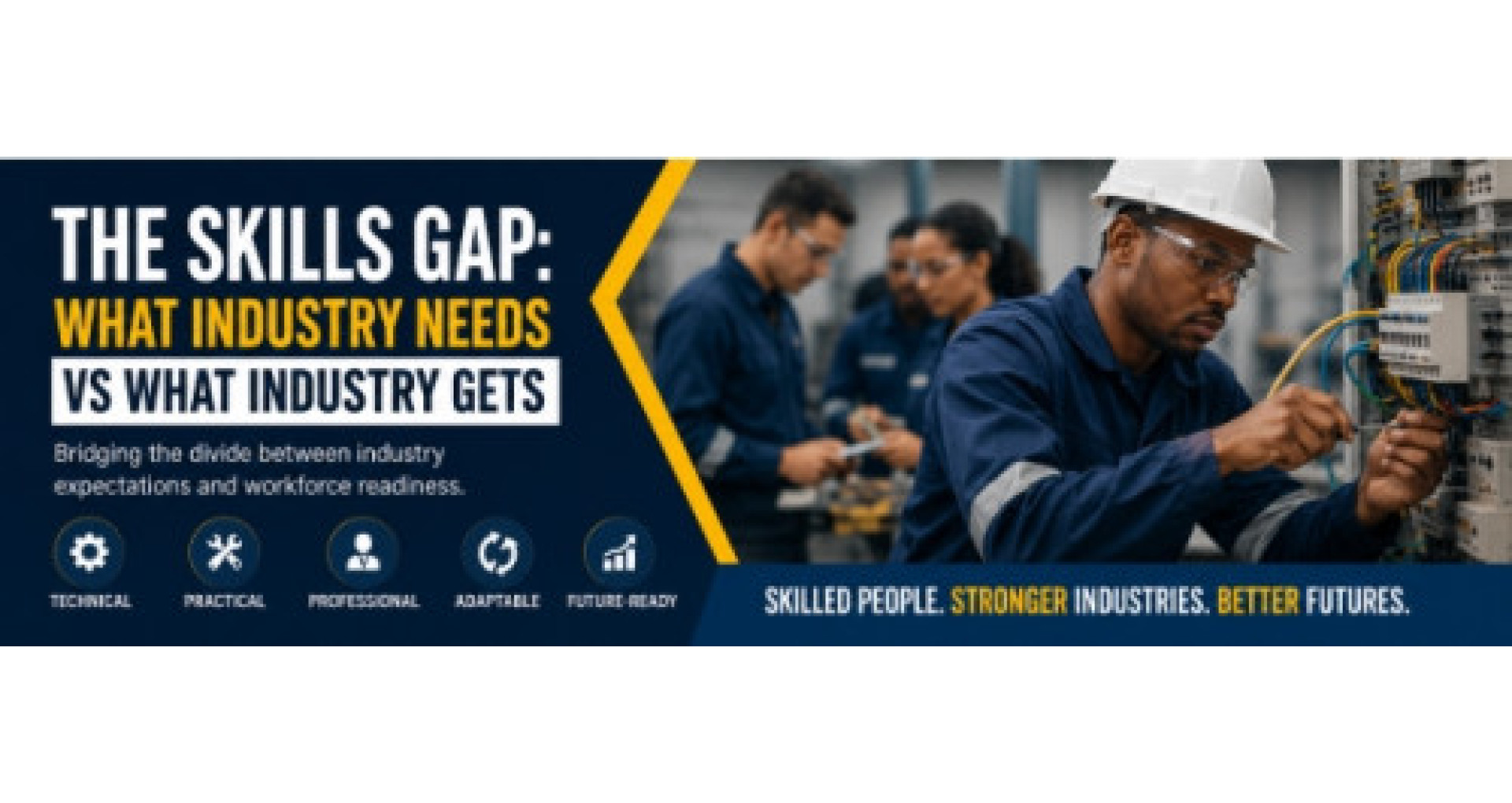
The Skills Gap: Bridging the Divide Between Industry Expectations and Workforce Readiness
Why South Africa Needs More Than Qualifications to Build a Future-Ready Workforce
South Africa's industries are evolving rapidly. Advances in technology, renewable energy, automation, and infrastructure development are transforming the way businesses operate and the skills they require. Yet, despite thousands of people entering the job market every year, many employers continue to report difficulty finding candidates who are ready to perform from day one.
This disconnect is known as the skills gap the difference between what employers need and what many job seekers are equipped to offer. Closing this gap is essential not only for business growth but also for reducing unemployment and strengthening South Africa's economy. Employers increasingly seek candidates with both technical expertise and practical workplace competencies, particularly in engineering and technical sectors.
Understanding the Skills Gap
A qualification is an important achievement, but in today's workplace, it is only one part of the equation.
Many organisations require professionals who can immediately contribute to operations by combining technical knowledge with practical experience, critical thinking, communication, and adaptability. While many candidates possess academic knowledge, employers often identify gaps in workplace readiness, hands-on experience, and problem-solving abilities.
Industries are no longer simply recruiting people who can perform a task—they are looking for individuals who can add value, work collaboratively, embrace change, and continuously develop their skills.
What Industry Is Looking For
Modern employers consistently seek individuals who demonstrate:
- Strong technical competence
- Practical workplace experience
- Professional communication skills
- Accountability and reliability
- Critical thinking and problem-solving
- Adaptability to new technologies
- Safety awareness and compliance
- A willingness to learn continuously
These qualities help businesses remain competitive while maintaining high standards of productivity, quality, and customer service.
Why Practical Training Matters
One of the biggest contributors to the skills gap is limited exposure to real working environments.
Practical training allows learners to apply theoretical knowledge, gain confidence using industry equipment, understand workplace procedures, and develop the discipline expected by employers. This experience significantly improves employability because learners graduate with both knowledge and practical competence.
Training programmes that combine classroom learning with workplace experience also help employers reduce onboarding time and improve workforce productivity.
Preparing Learners for Tomorrow's Industries
South Africa's economy is expanding into sectors that require increasingly specialised skills, including renewable energy, electrical infrastructure, automation, and advanced manufacturing.
These industries require professionals who can adapt quickly to changing technologies while maintaining high standards of workmanship and safety. Investing in technical education today ensures that the workforce is prepared for tomorrow's opportunities, particularly as demand for qualified artisans continues to grow.
How TEES Is Closing the Gap
At Try Easy Electrical Solutions, we believe that effective skills development goes beyond certification.
Our programmes are designed to develop individuals who are technically competent, professionally prepared, and confident in workplace environments. Through practical training, Artisan Recognition of Prior Learning (ARPL), apprenticeships, workplace exposure, business coaching, and employer partnerships, TEES equips learners with skills that align with real industry requirements.
In addition to technical development, learners are encouraged to build leadership, professionalism, communication skills, and entrepreneurial thinking. This holistic approach ensures graduates are prepared not only for employment but also for long-term career growth and business ownership.
Partnerships That Create Impact
Closing the skills gap cannot be achieved by training providers alone.
Success depends on strong collaboration between employers, government departments, SETAs, educational institutions, and industry partners. By working together, these stakeholders create opportunities for workplace learning, mentorship, internships, and practical industry experience that benefit both learners and businesses.
At TEES, these partnerships remain central to our mission of developing a skilled workforce that supports economic growth while meeting the changing needs of industry.
Looking Ahead
As industries continue to evolve, workforce development must evolve alongside them.
The future belongs to organisations that invest in people and to individuals who commit to lifelong learning. By aligning training with industry expectations, South Africa can produce a workforce that is not only qualified but also capable, adaptable, and ready to make an immediate impact.
At TEES, we are proud to play a role in bridging the gap between education and employment empowering learners with the skills, confidence, and practical experience needed to build successful careers and strengthen the industries that drive our economy.
Because the future of South Africa depends not only on what people know but on what they are prepared to do