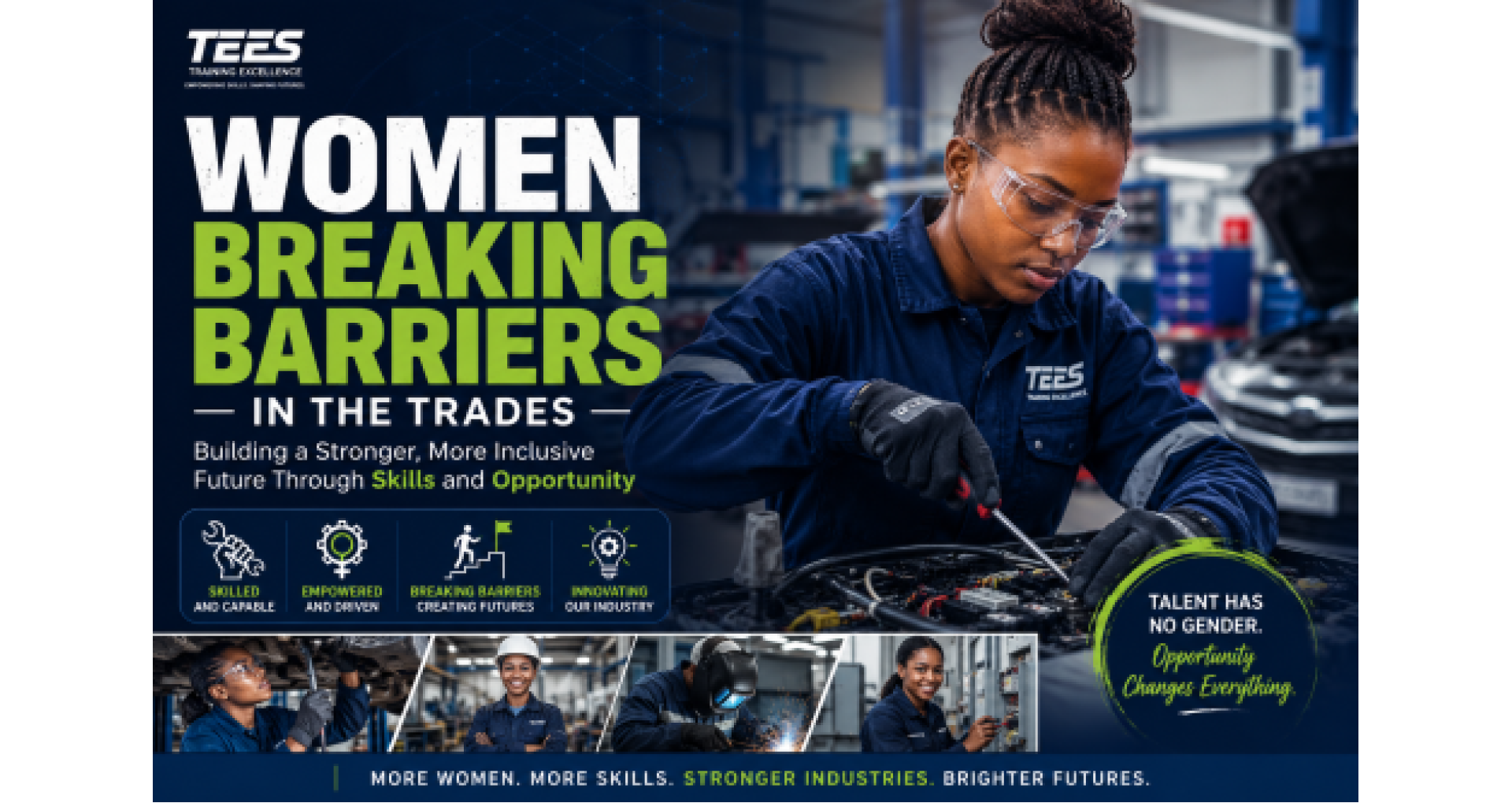
Women Breaking Barriers in the Trades: Why the Future of Skilled Industries Depends on Inclusion
Challenging Old Perceptions
For many years, careers in electrical work, automotive trades, welding, and engineering were viewed as industries reserved primarily for men. Walk into most workshops, construction sites, or industrial facilities a decade ago, and you would likely find very few women working on the tools.
Today, that picture is changing.
Across South Africa and around the world, more women are entering technical and artisan careers, proving that skill, determination, and competence have no gender. They are becoming electricians, auto electricians, welders, mechanics, technicians, and entrepreneurs, helping reshape industries that have traditionally been male dominated.
This shift is not simply about representation it is about unlocking talent, creating opportunities, and building a stronger workforce for the future.
The Skills Shortage South Africa Cannot Ignore
South Africa continues to face a shortage of skilled artisans across several sectors. Industries such as manufacturing, mining, construction, automotive, and energy require qualified professionals to support economic growth and infrastructure development.
At the same time, thousands of talented women are seeking meaningful career opportunities.
The solution is clear: the country cannot afford to leave half of its potential workforce on the sidelines.
Encouraging more women to enter the trades is not only a matter of equality; it is a practical response to a growing demand for skills.
When industries widen access to technical careers, they gain access to a larger talent pool, diverse perspectives, and new ideas that contribute to innovation and productivity.
Breaking Through Stereotypes
Despite progress, many young women still face outdated perceptions about technical careers.
Common misconceptions include:
- "Trades are too physically demanding."
- "Engineering is for men."
- "Women won't fit into workshop environments."
- "Technical careers are not suitable for women."
The reality tells a different story.
Modern industries increasingly value problem-solving, technical knowledge, diagnostic skills, precision, communication, and adaptability. These qualities are not defined by gender.
Success in the trades comes from commitment, training, and continuous learning—not from outdated stereotypes.
Every woman who enters a workshop, passes a trade test, or qualifies as an artisan helps challenge these misconceptions and opens doors for others to follow.
Why Representation Matters
When young women see successful female artisans, electricians, or technicians, something powerful happens.
They begin to believe:
"I can do that too."
Representation plays a critical role in career decision-making. Seeing women succeed in technical environments helps break mental barriers and encourages more learners to consider careers they may never have explored before.
This is why industry role models matter.
Every qualified woman working in the trades becomes an example of what is possible for the next generation.
More Than Employment: Building Independence
Technical skills offer more than employment opportunities.
They create independence.
A qualified artisan can:
✔ Secure stable employment
✔ Earn a competitive income
✔ Develop specialised expertise
✔ Start a business
✔ Create jobs for others
✔ Contribute to economic growth
For many women, technical training becomes a pathway not only to financial stability but also to leadership and entrepreneurship.
Across the country, women-owned workshops, electrical businesses, and engineering enterprises are demonstrating that skilled trades can be powerful vehicles for economic empowerment.
The Role of Training Providers
Creating greater participation requires more than encouragement it requires access.
Training institutions play an important role in creating environments where women feel supported, equipped, and confident to succeed.
This includes:
- Access to quality technical training
- Practical workplace exposure
- Mentorship opportunities
- Industry-relevant skills development
- Trade test preparation
- Professional development
When learners are given the right tools, guidance, and opportunities, they can thrive regardless of gender.
Building the Workforce of Tomorrow
The future of skilled industries will depend on attracting the best talent available.
As technology continues to transform sectors such as automotive, electrical engineering, renewable energy, and manufacturing, the demand for skilled professionals will only continue to grow. Women have an important role to play in this future, by increasing participation in the trades today, South Africa can build a more diverse, innovative, and resilient workforce tomorrow.
Looking Ahead
The conversation is no longer about whether women belong in the trades. The women already succeeding in these industries have answered that question.
The real focus should be on creating more opportunities, removing barriers, and ensuring that every learner with the passion and ability to succeed has access to quality training and career development.
At TEES, we believe talent has no gender. Through skills development, practical training, and workplace readiness programmes, we are committed to helping future artisans build successful careers and contribute meaningfully to industry.
Because when women succeed in the trades, industries grow stronger, communities benefit, and future generations gain new possibilities.
Final Thought
The next generation of artisans, technicians, and industry leaders may not look like the last.
And that is exactly what progress looks like.
The future of the trades is skilled, innovative, and increasingly diverse and women are helping lead the way.